
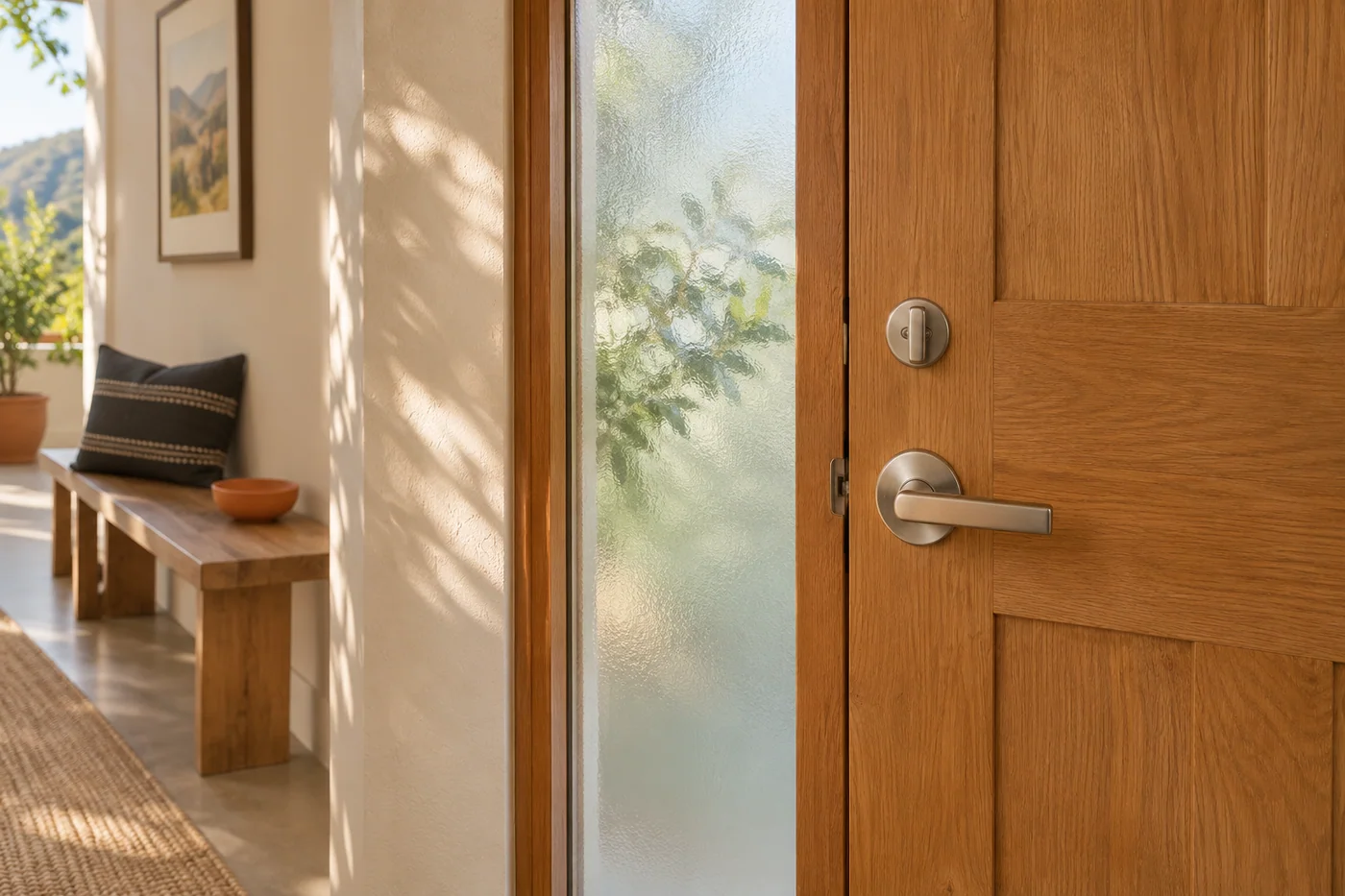
You lift the handle a little, pull the door toward you, then try the key again. When that becomes part of leaving home, it is easy to stop noticing it. A useful repair starts by naming what the door needs you to do.
Residential locksmith requests in Glendora can involve a physical key, a latch or a keypad on the same entrance. Those parts work together, but a change to one doesn't settle the condition or access settings of the others.
Describe the side that gives trouble
The inside lever may turn normally while the outside key does not. Or both sides may operate, yet the door won't stay latched after an ordinary close. Mention the action that fails and the action that still works.
These observations help define the work without choosing a part too early. They aren't a reason to keep forcing a resistant key or to repeat an unreliable movement until the door finally catches.
A replacement door brings its own records
If the entrance or hardware was recently changed, keep the order confirmation, installer details and any model information. The door maker, the handle brand and the cylinder may be separate names. A photo of the finish alone won't answer every fitting question.
Our guide to identifying replacement hardware explains what is useful to keep before you buy another handle. Measurements and compatibility still need checking against the actual product and entrance.
Changing who has access
A key change is a different goal from fixing a reluctant latch. Rekeying suitable hardware can change which physical key operates a cylinder. It doesn't repair a failed handle or establish that an old keypad code has been removed.
With a connected lock, separate the physical key, stored codes and people with app access. Write down the access you want to retain and the access you want to remove. The correct process depends on the exact model and who owns or administers it.
One home can have several kinds of entrance
The front door, a side gate and a door from the garage don't have to use the same hardware. Wanting one convenient key is understandable, but matching finishes or similar-looking keyholes do not prove that the locks can share it.
In a rented or jointly managed property, agree on which parts you can authorize before changing them. A private entrance and a common access door may have different responsible people, even when they are a few steps apart.
The local setting helps identify the entrance
Glendora's Village, Route 66 corridor and foothill streets are useful geographic references. They don't tell us which lock a home has or whether it has been changed. The actual street address and door description are what make the request specific.
If the everyday entrance is a garage door, describe the physical door and the opener separately. Garage door repair has its own equipment and assessment needs; a house-key request doesn't establish the condition of that system.
What should work at the end?
A useful goal is concrete: this entrance closes and latches normally, this key operates the agreed lock, and the household knows which access was changed. Keep any model information and new key labels with the record of the work.
Call 626-498-1755 about the entrance in Glendora. You can begin with the problem in plain words. The hardware, permission and availability can then be checked for the actual request.
Questions about the request
Can all the house locks use one key?
It depends on the actual hardware and key systems. Similar shapes and finishes don't establish compatibility.
Will a new code stop the old metal key?
Not by itself. Codes and the physical cylinder are separate access layers. Check what change the exact lock supports.
Should I buy a handle before arranging a repair?
Keep the model and order details first. A qualified installer should verify fit and the fault before another purchase.