
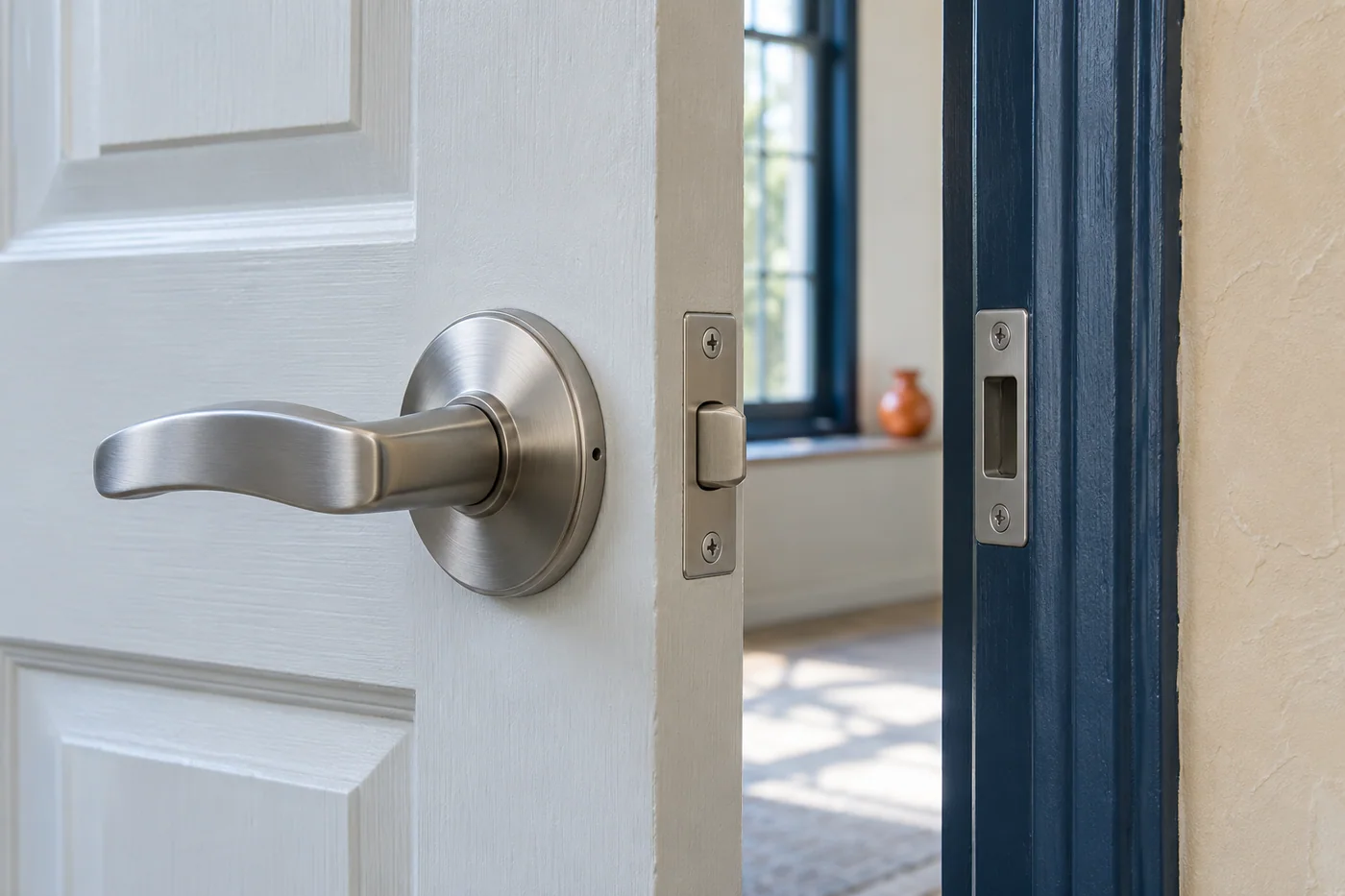
A loose handle gets replaced, then the new one starts behaving much like the old one. Another new part may not answer the missing question: what is happening at the door when it is used normally?
Lock repair in Glendora starts with the actual entrance and the action that fails. Keep the symptom, any recent change and the hardware identity together. That gives the assessment more to work with than a guess at a replacement.
The key, handle and latch leave different clues
A key that resists turning describes the cylinder's side of the experience. A handle that turns without its usual response describes another. A door that swings shut but doesn't stay latched adds the entrance itself to the picture.
Describe what you already observed in ordinary use. You do not need to force the mechanism, take it apart or repeat a troublesome movement to produce a diagnosis. A broken or insecure entrance deserves attention without extra testing by the owner.
A new duplicate is not a universal repair
If the problem began with one newly cut key, keep both that key and any older one that was working. If every key has become difficult, say that too. Those are different histories even when the keyhole looks unchanged.
A bent, cracked or damaged key should not be pushed harder. Keep loose pieces if they came free, and explain if a piece remains inside. Avoid adding glue, improvised tools or more broken material to the lock.
Recent work is useful evidence
Keep the model, invoice or packaging for hardware that was changed. The replacement's intended function matters as much as its finish. A handle can look similar while serving a different locking or passage function.
The replacement hardware guide outlines a simple record to keep before ordering again. Fit needs the correct product information and the actual entrance; an internet photo alone is not a fitting specification.
Decide what the repair should restore
The scope might be normal handle return, reliable latching or operation with the intended key. It may involve retaining suitable parts or replacing a failed component. The proposed work should name that result rather than promising to make the whole door new.
If the hardware is repaired but physical-key access also needs changing, treat rekeying as a separate goal. Likewise, a keypad or account change does not prove a mechanical fault has gone away.
Shared doors need a responsible person
For an apartment building or workplace, identify who manages the entrance. A person using the door every day may notice the fault first without being the person who can authorize a hardware change.
A business entrance also has to suit its actual use, including safe exit. Improvised extra locks are not a substitute for assessing the failed hardware. Keep the relevant owner, manager or building contact involved.
A local address, a specific entrance
Glendora's Route 66 corridor and Village are helpful references, but neither tells us the age or design of your lock. The address and entrance description keep the request tied to the actual property.
Call 626-498-1755 with the issue and any recent changes. If you cannot get inside, mention that at the start; an opening request and the repair left afterward need a clear, agreed scope.
Questions about the request
Should I keep replacing the handle if it comes loose again?
A recurring problem needs assessment of the actual door and hardware. Repeating the same purchase is not a diagnosis.
Does every difficult key mean a new lock?
No single symptom establishes that. Keep the key and lock history and let the actual hardware guide the repair plan.
Do you need photos?
Safely visible details and model information can help identify parts. Don't remove or disturb hardware just to obtain a picture.